The white-tailed deer (Odocoileus virginianus) is one of North America’s most iconic and adaptable wild animals. From dense forests to suburban backyards and open meadows, these graceful creatures have mastered the art of survival in almost every environment. Understanding these White-Tailed Deer Facts helps learners appreciate how wildlife thrives alongside human development.
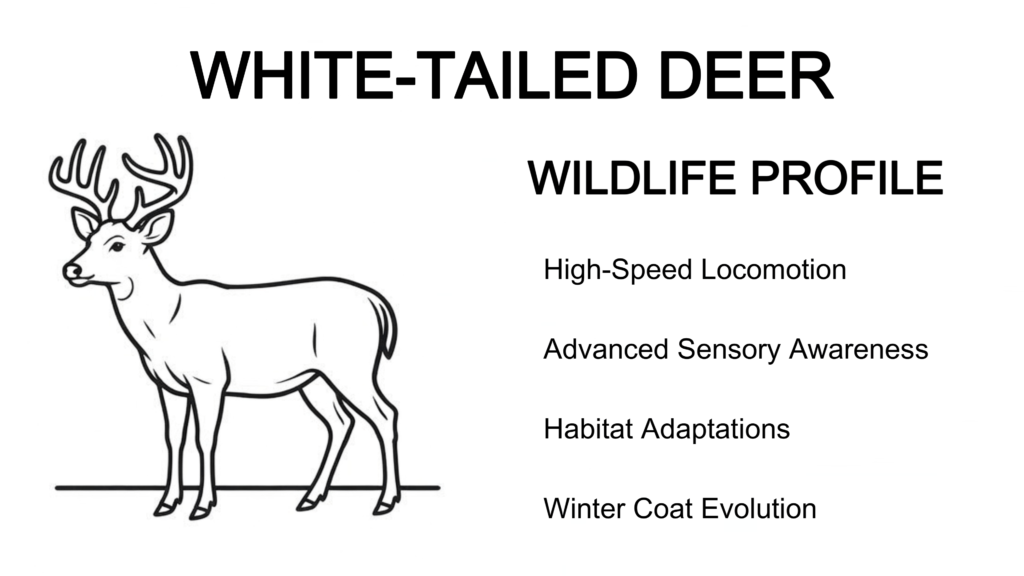
Table of Contents
Advanced Sensory Awareness of the White-Tailed Deer
White-tailed deer live in a constant state of high alert. Their large, mobile ears can rotate nearly 180 degrees to pinpoint even the faintest sounds from any direction. Combined with an incredibly powerful sense of smell, they can detect danger long before most predators (or humans) ever spot them. This heightened awareness is a key survival trait in the wild.
For those interested in how we describe such majestic animals in other languages, you can learn how to say deer in Tagalog translation to expand your vocabulary.
Built for Speed and Escape
These deer are impressive athletes. They can sprint up to 30 miles per hour and leap effortlessly over fallen logs, fences, and other obstacles in the forest. Their strong hind legs give them the explosive power needed to disappear into the woods in seconds. Their physical prowess makes them one of the most successful mammals in Tagalog contexts and global biological studies.
According to the National Wildlife Federation, these animals are also known for their incredible agility in varying terrain.
Diet and Habitat Flexibility
As herbivores, white-tailed deer primarily eat leaves, twigs, shoots, acorns, and other forest plants. This flexible diet is one of the secrets to their success—they can thrive in woodlands, farmlands, swamps, and even suburban neighborhoods. Their ability to find food in diverse locations allows them to maintain stable populations.
If you are exploring local nature with your families, checking out a Filipino wildlife scavenger hunt can be a great way to engage with the environment. This is just one of many White-Tailed Deer Facts regarding their resilience.

The Famous “White Tail” Warning Signal
The white-tailed deer gets its name from the bright white underside of its tail. When startled or alarmed, the deer raises its tail like a flag, flashing the white patch to warn other deer in the area of danger. It is one of nature’s most effective visual alarm systems. This behavior is a fascinating example of social communication among herd animals and is a core part of White-Tailed Deer Facts.
10 Fascinating White-Tailed Deer Facts
Here are some verified details every nature lover should know about this species:
- High Jumpers: They can leap over 8 feet high in a single bound.
- Excellent Swimmers: White-tailed deer are strong, natural swimmers and will cross rivers or lakes when needed.
- Wide Vision: Their eyes give them an impressive 310-degree field of view, helping them spot threats.
- Unique Anatomy: Surprisingly, they have no upper front teeth—they use their lips and tongue to strip plants instead.
- Antler Growth: Males, or bucks, grow new antlers every year, which are covered in a soft tissue called “velvet.”
- Fawn Camouflage: Young deer have white spots that help them blend into the forest floor to hide from predators.
- Ruminant Stomachs: Like cows, they have a four-chambered stomach to help digest tough plant matter.
- Weight Range: Adults can weigh anywhere from 150 to 300 pounds depending on their habitat and food supply.
- Global Range: While famous in North America, they are also found in Central and South America.
- Color Change: Their coat changes from a reddish-brown in summer to a grayish-brown in winter for better insulation and camouflage.
Observing Wildlife Responsibly
Whether you’re spotting one at the edge of a field at dusk or learning about wildlife for a project, the white-tailed deer is a perfect example of nature’s ingenuity. These White-Tailed Deer Facts show that observing them requires patience and silence. Many parents enjoy documenting sightings as part of a broader interest in zoo animals in Tagalog or local forest inhabitants.
For more scientific details on their classification, the Smithsonian’s National Zoo provides extensive research on their life cycle and conservation status. You might also find it interesting to learn about other forest creatures, such as how to say wolf in Tagalog.
FAQ About White-Tailed Deer Facts
What do white-tailed deer eat? They are herbivores that consume a variety of plants, including green leaves, fruits, nuts, and woody vegetation like twigs and bark.
Why do deer have white tails? The white underside serves as a signaling device. Raising the tail (flagging) alerts other members of the herd that a predator or danger is nearby.
Do all deer have antlers? In the white-tailed species, typically only the males grow antlers. They shed these antlers annually in the winter and grow a new set in the spring.
How long do they live in the wild? In a natural environment, most white-tailed deer live between 6 to 10 years, though many factors like predation and habitat quality influence this.
Sharing these White-Tailed Deer Facts is a wonderful way for the younger generation to connect with the natural world and understand the complexity of animal behavior.
To wrap up this ultimate wildlife guide, here is a concise conclusion following your FAQ section to bring the post to a strong finish.
Conclusion: Appreciating Nature’s Ingenuity
The white-tailed deer is far more than just a common sight in the woods; it is a masterpiece of adaptation and survival. From their specialized “flagging” communication to their impressive physical agility, these animals demonstrate the incredible complexity of the natural world. By exploring these White-Tailed Deer Facts, learners and families can develop a deeper respect for the wildlife that shares our environment. Whether you are observing them in a local forest or studying their behavior from home, understanding these graceful creatures encourages a lifelong journey of environmental discovery and cultural appreciation.