Tagalog to English Fish & Seafood Names are essential for anyone wanting to navigate a Filipino market or cook traditional recipes. Whether you are a beginner learner or a parent teaching the younger generation about their heritage, knowing these terms helps bridge the gap between cultural identity and daily life. In the Philippines, the ocean is a primary source of life, and our language reflects a deep respect for the sea.
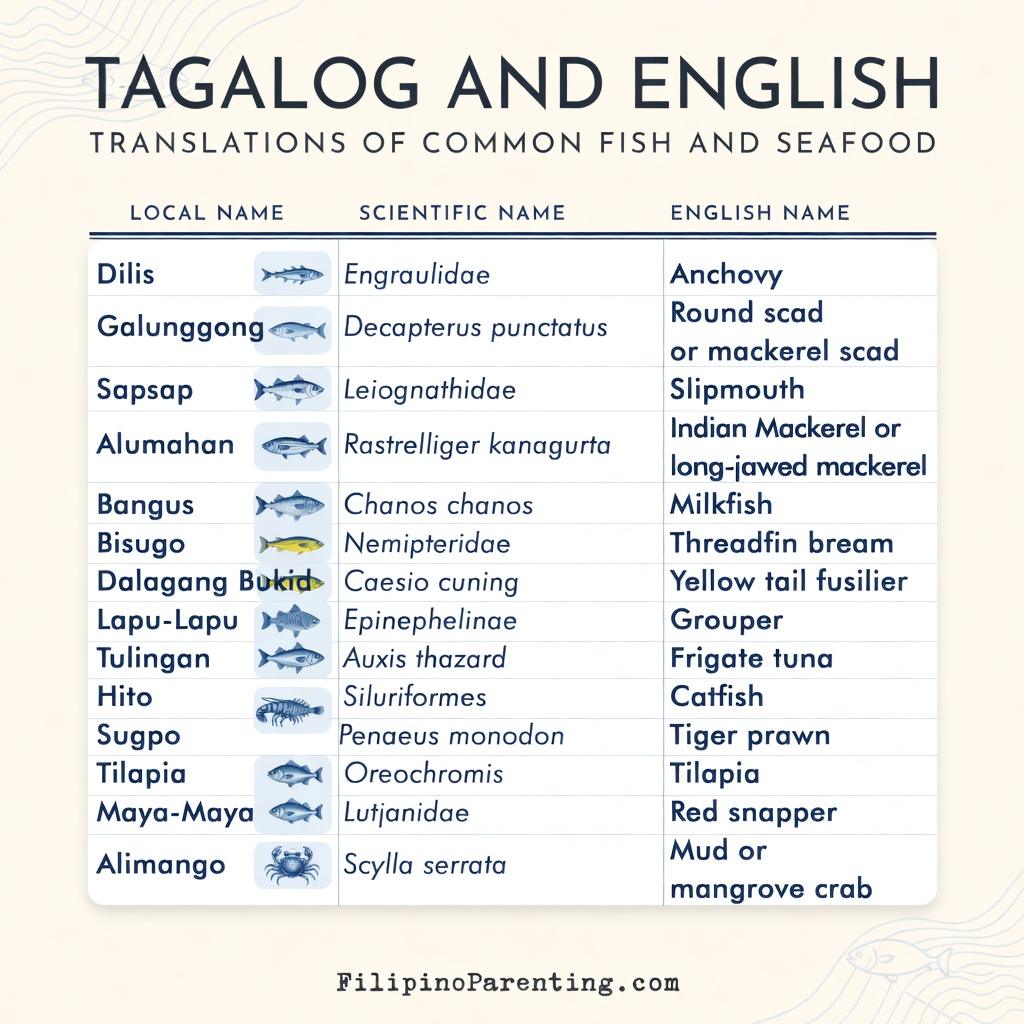
Table of Contents
The Importance of Seafood in Filipino Culture
Filipino hospitality is often centered around the dining table. When we share a meal, we are connecting through an invisible thread of generosity. Knowing the correct Tagalog to English Fish & Seafood Names allows families to pass down recipes for dishes like Sinigang or Paksiw with accuracy. It is a way of ensuring that our cultural stories and culinary traditions remain vibrant for years to come.
Common Tagalog to English Fish & Seafood Names
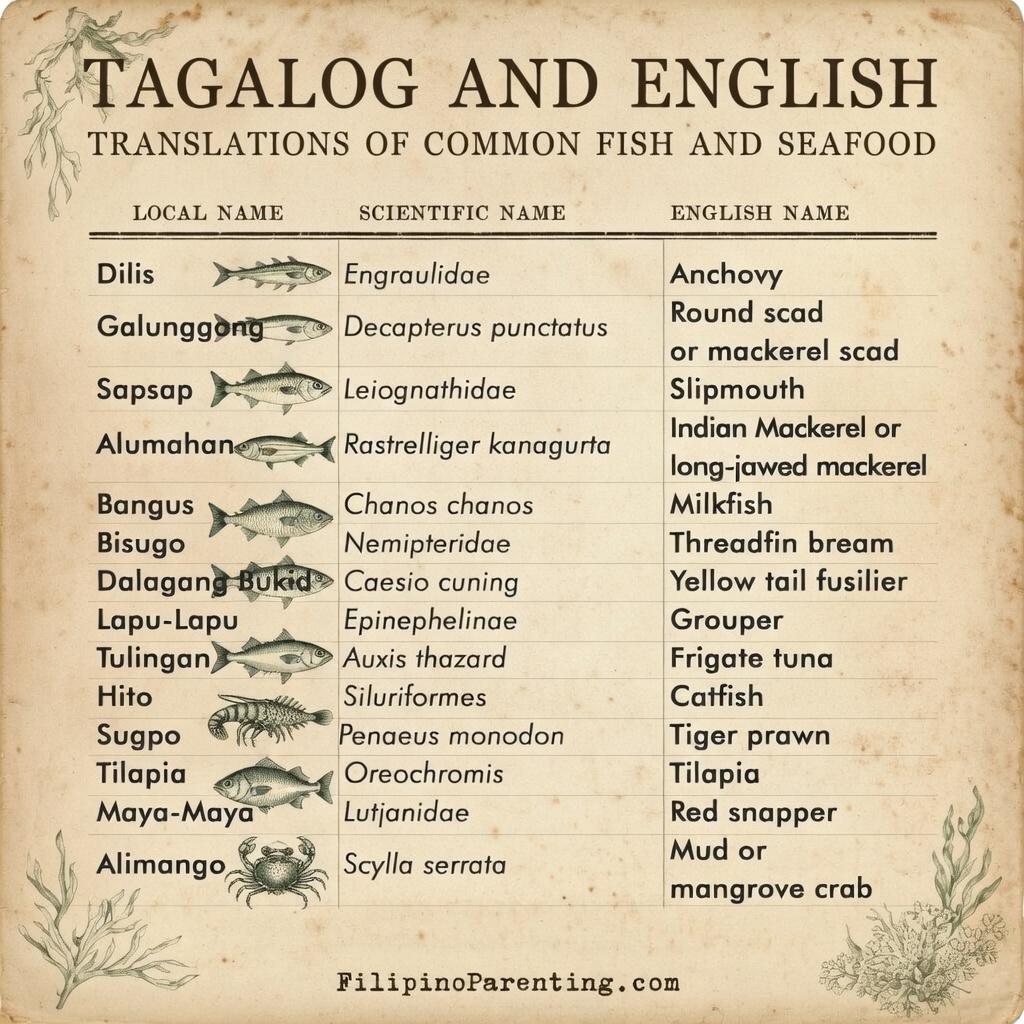
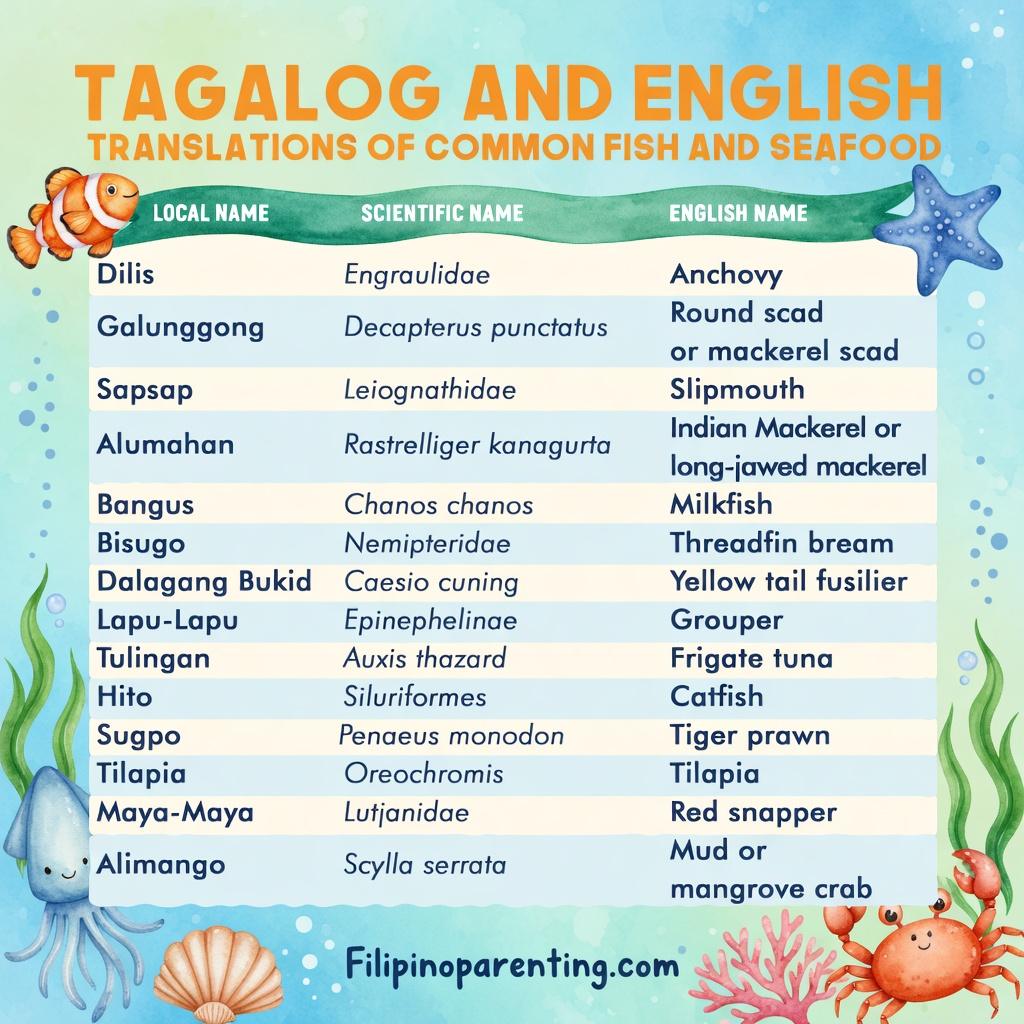
To help you on your journey, we have compiled a list of common seafood found in Philippine waters and markets. Using the right Tagalog to English Fish & Seafood Names ensures you get exactly what you need for your next family feast.
| Local Name (Tagalog) | English Name | Scientific Name |
| Bangus | Milkfish | Chanos chanos |
| Tilapia | Tilapia | Oreochromis |
| Galunggong | Round Scad / Mackerel Scad | Decapterus punctatus |
| Dilis | Anchovy | Engraulididae |
| Lapu-Lapu | Grouper | Epinephelinae |
| Maya-Maya | Red Snapper | Lutjanidae |
| Hito | Catfish | Siluriformes |
| Alumahan | Indian Mackerel | Rastrelliger kanagurta |
| Sapsap | Slipmouth | Leiognathidae |
| Bisugo | Threadfin Bream | Nemipteridae |
| Dalagang Bukid | Yellow Tail Fusilier | Caesio cuning |
| Tulingan | Frigate Tuna | Auxis thazard |
| Sugpo | Tiger Prawn | Penaeus monodon |
| Alimango | Mud Crab / Mangrove Crab | Scylla serrata |
Deepening Your Vocabulary
If you are looking to expand your knowledge beyond just the market, you can explore our guides on fish in Tagalog or specific species like the milkfish in Tagalog. Understanding these Tagalog to English Fish & Seafood Names is a great starting point for mastering the language in a functional, everyday way.
For those interested in the biological side of these creatures, the World Register of Marine Species provides extensive scientific data, while FishBase is an excellent external resource for identifying species globally.
Frequently Asked Questions
What is the National Fish of the Philippines?
The Bangus, or Milkfish, is widely recognized as the national fish. It is prized for its delicious, mild flavor and is a staple in Filipino households.
Why are there different names for the same fish?
In the Philippines, names can vary by region or dialect. However, the Tagalog to English Fish & Seafood Names listed here are the most commonly understood terms in major markets and educational resources.
How do I say “seafood” in Tagalog?
The general term for seafood is “pagkaing-dagat,” which literally translates to “food from the sea.”
Final Thoughts on Filipino Seafood
Learning Tagalog to English Fish & Seafood Names is more than just a translation exercise; it is an act of cultural preservation. By using these terms, we honor the hardworking fishermen and the rich biodiversity of the Philippine islands. We hope this guide helps you feel more confident in the kitchen and in your language journey.