Spider in Tagalog is gagamba. Spiders are arachnids—not insects—and they are commonly found in houses, gardens, farms, and forests throughout the Philippines. Although some species may look frightening, most spiders are harmless and play an important role in controlling insect populations naturally.
Understanding spider in Tagalog helps expand your vocabulary about animals, nature, and everyday household encounters. This guide includes spider vocabulary words in Tagalog, example sentences, notable spider species in the Philippines, and important facts about their characteristics and ecological role.
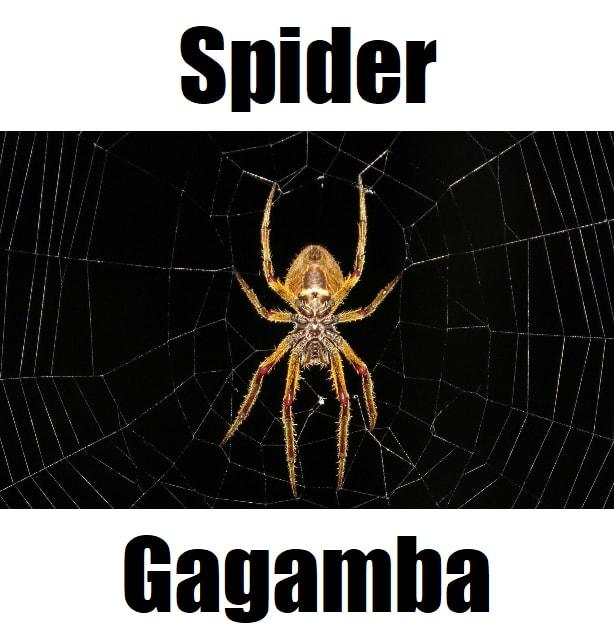
Table of Contents
Spider Vocabulary Words in Tagalog
Here are common Tagalog words connected to spiders and their environment. Learning these terms will help you describe spider behavior, habitats, and physical traits more clearly in Filipino conversations.
- Gagamba – spider
- Araknid – arachnid
- Hayop – animal
- Bahay – house
- Hardin – garden
- Bahay-gagamba / Bahay-alalawa – spider web
- Sapot – cobweb
- Bukid – farm
- Takot – fear
- Hayop na walang buto – invertebrate
For more scientific information about spider classification, anatomy, and behavior, you can visit Britannica, which provides detailed explanations about spiders and their characteristics.
Example Sentences Using “Spider” in Tagalog
Practicing sentences improves your understanding of spider in Tagalog and helps you speak more naturally.
Ang gagamba ay hindi isang insekto.
A spider is not an insect.
Ang gagamba ay isang araknid.
A spider is an arachnid.
Ang gagamba ay may apat na pares ng mga mata.
A spider has four pairs of eyes.
Ang gagamba ay may apat na pares ng mga paa.
A spider has four pairs of legs.
Ang gagamba ay walang mga sungot tulad ng mga insekto.
A spider does not have antennae like insects.
Ang gagamba ay nakagagawa ng sutla.
A spider can produce silk.
Karamihan sa mga gagamba ay hindi mapanganib.
Most spiders are harmless.
Ang gagamba ay gumagawa ng bahay-gagamba para bitagin ang mga insekto.
A spider makes webs to trap insects.
Using these examples regularly helps you confidently describe a spider in Tagalog in real-life situations. To expand your learning further, you can explore our complete English Tagalog names of insects guide for more vocabulary related to common insects and small creatures found in Filipino homes and gardens.
Key Characteristics of a Spider in Tagalog (Gagamba)
Spiders have unique traits that distinguish them from insects:
- Eight legs (four pairs)
- Two main body parts (cephalothorax and abdomen)
- No antennae
- Ability to produce silk
- Venom used to immobilize prey
Unlike insects, spiders belong to the arachnid group, which also includes scorpions and mites.
Common & Notable Spider Species in the Philippines
The Philippines is home to hundreds of spider species, contributing to the country’s rich biodiversity.
Common Species
Huntsman Spiders (Sparassidae)
Large, fast-moving spiders often found inside homes. Generally harmless but intimidating due to size.
Orb Weavers (Neoscona species)
Known for their large circular webs, commonly seen in gardens.
Wolf Spiders (Lycosidae)
Ground-dwelling hunters that do not rely on webs to catch prey.
Philippine Tangerine Tarantula (Selenobrachys philippinus)
A native tarantula species with striking orange coloration.
These species show how diverse and adaptable spiders are across different Philippine environments—from urban homes to rural forests. Understanding these examples makes it easier to describe a spider in Tagalog in more specific and meaningful ways, especially when discussing size, habitat, or behavior.
If you want to continue expanding your insect and creature vocabulary, you can also explore our detailed guide on praying mantis in Tagalog to compare another fascinating predator commonly found in Filipino gardens and farms.
Are Spiders Dangerous in the Philippines?
Most native spiders in the Philippines are harmless to humans. However, a few introduced species may cause medical concerns.
Brown Recluse Spider (Loxosceles rufescens)
Can cause skin lesions in rare cases.
Widow Spiders (Latrodectus)
Recognizable by a red marking and possess neurotoxic venom, though local cases are uncommon.
Overall, serious spider bites in the Philippines are rare.
Cultural and Environmental Importance
piders play an essential role in ecosystems by naturally controlling insect populations. As active predators, they help reduce the number of flies, mosquitoes, moths, and other small insects that can damage crops or become household pests. Without spiders, pest populations could increase significantly in farms, gardens, and even urban areas. Their presence supports ecological balance and reduces the need for chemical pest control. For additional scientific insight into how spiders function as natural predators, you can explore resources from the Smithsonian National Museum of Natural History, which provides educational information about arachnids and biodiversity.
In some regions of the Philippines, spider fighting is considered a traditional pastime, especially among children in rural communities. Participants carefully collect small spiders and place them on sticks to observe their natural territorial behavior. While this activity is often viewed as cultural play, spiders remain an important part of local biodiversity and environmental balance.
Conclusion
Learning how to say spider in Tagalog — gagamba — expands your knowledge of animals and nature vocabulary. Although spiders are sometimes feared, they are fascinating creatures that contribute greatly to environmental balance.
Understanding spider in Tagalog allows you to describe their characteristics, habitats, and behavior accurately in everyday Filipino conversations.