🌟 The Heart of Filipino Counting
In the Philippines, life revolves around sharing—especially sharing a meal. Whether it’s gathering for almusal (breakfast) or inviting a passing neighbor to join the table for a quick merienda, Filipinos are naturally gregarious and hospitable. In our culture, we don’t just count things; we count the people we love and the blessings we share.
Learning how to say the number 1 in Tagalog is the first step in participating in these social circles. Whether you are ordering isang (one) order of lechon at a fiesta or celebrating your baby’s very first birthday, the word Isa is where every Filipino story begins. If you’ve been searching for the most natural way to use the number 1 in Tagalog, let’s dive into the basics
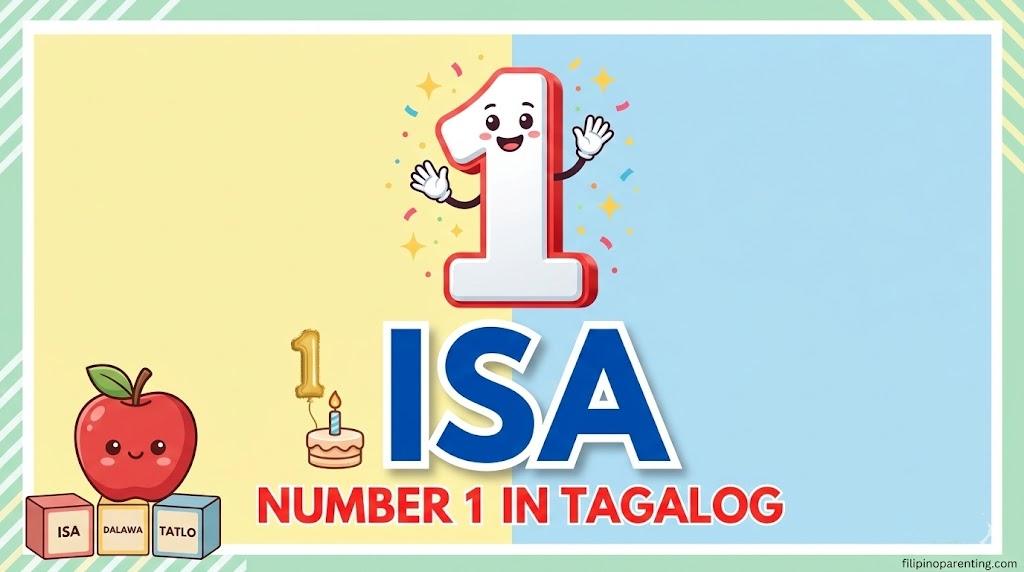
Table of Contents
1. The Basics: How to say the Number 1 in Tagalog
Learning to count in Tagalog starts with the most important building block: the number 1 in Tagalog. In the Philippines, the word for “one” is Isa. It is the foundation for all other numbers and a word you will hear every single day in Filipino households, from counting pandesal in the morning to the final countdown of a game.
If you are teaching your child the number 1 in Tagalog, here is the quick breakdown:
- English: One
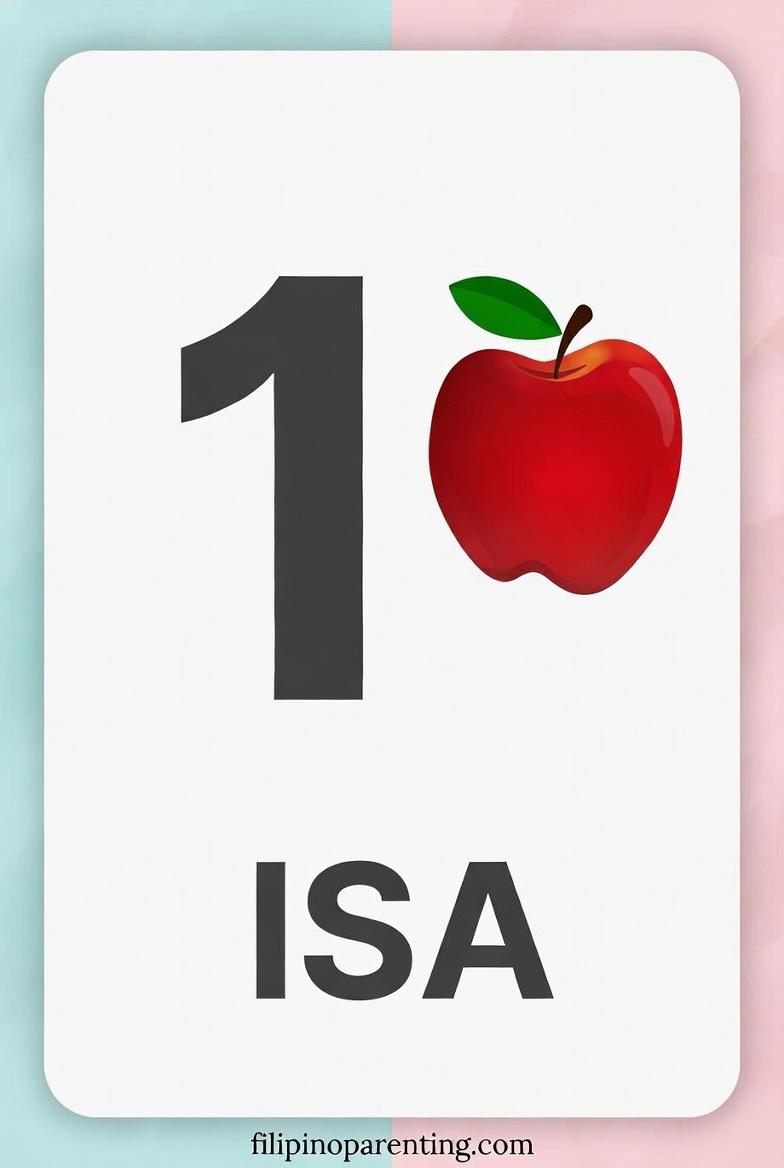
- Tagalog (Number 1): Isa
- Pronunciation: ee-sah
- Ordinal (1st): Una (ooh-nah)
2. Grammar Secret: Using the Number 1 in Tagalog as a Linker
To reach a higher level of fluency when using the number 1 in Tagalog, you need to know a simple secret: The Linker. When you use the word Isa to describe an object (like a house or a piece of fruit), you don’t just say “Isa.” Instead, you add “-ng” to the end to connect it to the next word.
Here is how you transform the number 1 in Tagalog into a descriptive word:
- When counting alone: “Isa, dalawa, tatlo…”
- When describing an object: Isang bahay (One house)
- When describing a person: Isang tao (One person)
By adding that tiny “-ng”, you transform the word from a simple number into a descriptive adjective! This is the same rule we use when describing colors in Tagalog.
3. Simple Sentences Using the Number 1 in Tagalog
Practice makes perfect! To help you master the number 1 in Tagalog, here are three easy ways to use “Isa” in your daily conversation. These examples show how the number 1 in Tagalog shifts slightly depending on whether you are identifying an object or stating a quantity:
- Isa ang mansanas. (The apple is one / There is one apple.)
- May isa akong aso. (I have one dog.) — Check out our Aso (Dog) coloring pages for more practice!
- Isa lang ang kailangan ko. (I only need one.)

4. Birthday Section: Celebrating the Number 1 in Tagalog!
In Filipino culture, the 1st birthday is a major milestone! It’s common for families to throw a massive celebration to honor a child’s first year of life. Whether you are counting guests or gifts, using the number 1 in Tagalog during these events shows your heart for the culture.
To see more ways to celebrate this big day, you can read about our traditional Filipino birthday greetings. If you are writing a card or giving a toast, here is how to use the number 1 in Tagalog for a birthday:
- Maligayang unang kaarawan! (Happy first birthday!)
- Isang taon ka na ngayon! (You are now one year old!)
- Ang bilis ng panahon, isa ka na! (Time flies, you are already one!)
5. Daily Conversation: “Isa pa!”
If you visit the Philippines, you will hear “Isa” used in many idiomatic ways. One of the most popular is “Isa pa!” which means “One more!” You’ll hear this when someone wants another serving of champorado or tinapa.
Another common term is “Nag-iisa,” which means “alone” or “the only one.” For deeper academic info on how Filipino numbers evolved from their Austronesian roots, you can check out this resource on the history of the Tagalog language.
❓ Frequently Asked Questions (FAQ)
Q: What is the difference between “Isa” and “Uno”? A: “Isa” is the native Tagalog word. “Uno” is borrowed from Spanish. While both are used in the Philippines, “Isa” is preferred for general counting and formal education.
Q: Why do I hear people say “Isang” instead of “Isa”? A: As explained in our grammar section, the “-ng” is a linker used when “Isa” is followed by a noun (e.g., isang bata – one child).
Q: How do I say “First” in Tagalog? A: The word for first is Una.
💡 Learning Tip
Just as “Isa” is the first number, “A” is the first letter! Check out our Alpabetong Filipino Chart here to keep practicing your Tagalog basics.
🏁 Conclusion
Mastering the number Isa is more than just a math lesson; it’s your first step into the rich, hospitable world of Filipino culture. Whether you’re sharing a meal or celebrating a milestone, knowing how to say “one” connects you to the heart of the home. Keep practicing, and soon you’ll be counting your way through every fiesta!
🔢 Keep Counting!
You’re doing great! Let’s move to the next number and keep the momentum going:
- Current Number: 1 — Isa
- Next: Number 2 in Tagalog (Dalawa) →