The word for ant in Tagalog is Langgam, a common term used throughout the Philippines to describe these small yet incredibly strong insects. Understanding the meaning of ant in Tagalog helps language learners connect everyday vocabulary with real-life nature. Ants may be tiny, but they are powerful insects that live almost everywhere in the world, from forests to cities. In this guide, you will explore the definition of ant in Tagalog, related vocabulary words, example sentences, body parts, common species found in the Philippines, and fascinating facts about these hardworking creatures.
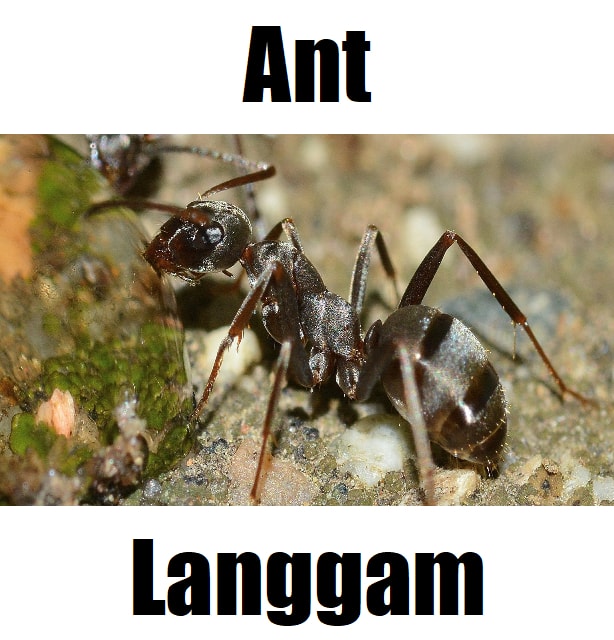
Table of Contents
What is an Ant?
An ant is a small insect belonging to the scientific family Formicidae. Ants are social insects that live in organized colonies. There are more than 10,000 known species worldwide, and they range in size from about 2 mm to 25 mm long.
Ants are usually brown, black, red, or yellow. They are omnivores, which means they eat both plants and other animals.
Ant in Tagalog Vocabulary List
Here are useful vocabulary words related to ant in Tagalog:
- Ant – Langgam
- Insect – Insekto
- Animal – Hayop
- Strong – Malakas
- Industrious – Masipag
- Social – Sosyal
- Sociable – Palasama
- Omnivore – Hayop na kumakain ng halaman at karne
- Pest – Peste
- Invertebrate – Hayop na walang buto
- Colony – Kolonya
- Queen Ant – Reyna ng langgam
- Worker Ant – Manggagawang langgam
Parts of an Ant’s Body
The body of an ant has three main sections:
1. Head
- Antennae – Used for smelling and communication
- Mandibles – Strong jaws for carrying food and defense
- Eyes – Detect movement and light
2. Thorax (Mesosoma)
This section connects the head to the abdomen and supports the legs.
3. Abdomen (Metasoma)
Contains the digestive system and, in some species, a stinger.
Ants do not have lungs. They breathe through tiny holes in their bodies.
Example Sentences Using Ant in Tagalog
Here are sample sentences to help you understand how to use ant in Tagalog:
- Ants are strong insects.
Ang mga langgam ay malalakas na insekto. - Ants carry food with their jaws.
Ang mga langgam ay nagbubuhat ng pagkain gamit ang kanilang panga. - Ants live in colonies.
Ang mga langgam ay nakatira sa mga kolonya. - Ants are adaptable to their environment.
Ang mga langgam ay kayang umangkop sa kanilang kapaligiran. - There are many ants on Earth.
Maraming langgam sa mundo.
Common Ant Species in the Philippines
The Philippines is rich in biodiversity, including many ant species. Some common types include:
- Tropical Fire Ant – Known for painful stings
- Yellow Crazy Ant – Fast-moving and invasive
- Pharaoh Ant – Small household pest
- Weaver Ant – Builds nests in trees
- Ghost Ant – Tiny ants attracted to sweets
These ants play an important role in nature, such as breaking down organic matter and controlling other insect populations.
Ant Habitat
Ants live on every continent except Antarctica. Their habitats include:
- Underground soil
- Inside wood
- In trees and plants
- Inside walls and buildings
Ant colonies can last for years if the queen survives.
Life Cycle of an Ant
Ants go through four stages:
- Egg — Itlog
- Larva — Uod
- Pupa — Krisalida
- Adult — Ganap na Langgam
The queen lays thousands of eggs. Worker ants take care of the young and gather food.
Interesting Facts About Ant in Tagalog (Langgam)
- A langgam can carry up to 20 times its body weight.
- Some queen ants live for many years.
- Ants communicate using chemicals called pheromones.
- Ants do not have ears but sense vibrations.
- Some ants can swim and float in water.
- Ants have existed since the time of dinosaurs.
Are Ants and Termites the Same?
Ants and termites may look similar, but they are different insects.
Ants have:
- Narrow waists
- Elbowed antennae
- Larger heads
Termites have:
- Straight antennae
- Thick waists
These physical differences make it easier to identify whether you are seeing an ant or a termite.
Why Ants Are Important
Ants are not just pests. They are important to the ecosystem because they:
- Help decompose organic material
- Spread seeds
- Control insect populations
- Improve soil quality
Even though some ants can invade homes, many species help maintain environmental balance and support healthy environments.
Frequently Asked Questions About Ant in Tagalog
What is ant in Tagalog?
The word for ant in Tagalog is Langgam.
Is a langgam an insect?
Yes, a langgam is an insect and belongs to the scientific family Formicidae.
Are ants and termites the same?
No, ants and termites are different insects. Ants have narrow waists and elbowed antennae, while termites have thick waists and straight antennae.
Why are ants important to nature?
Ants help decompose organic matter, spread seeds, improve soil, and control other insect populations.
Where do ants usually live?
Ants live in colonies underground, inside wood, in trees, and sometimes inside homes and buildings.
Final Thoughts on Ant in Tagalog
Learning the word ant in Tagalog (Langgam) helps expand your vocabulary while understanding more about these hardworking insects. Ants may be small, but they are intelligent, organized, and incredibly strong.
Whether you are studying biology, learning Tagalog, or simply curious about insects, understanding ant in Tagalog connects language with science and everyday life.