Wasp in Tagalog is called putakti, a stinging flying insect commonly seen in gardens, farms, and sometimes near houses. The term Wasp in Tagalog refers to this fast-moving insect known for its sharp sting and distinctive yellow-and-black body. Learning the meaning of Wasp in Tagalog helps expand your vocabulary while also understanding more about insects found in the Philippines.
Because wasps are common in tropical environments, knowing the translation of Wasp in Tagalog is useful for everyday conversations, school lessons, and science topics. In this post, you will learn vocabulary words related to Wasp in Tagalog, example phrases, body parts, species found in the Philippines, and interesting facts about this important insect.
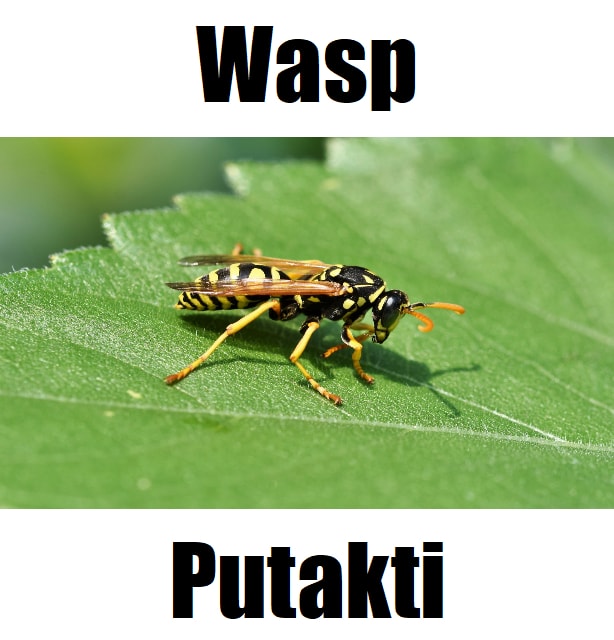
Table of Contents
Wasp Vocabulary Words (English–Tagalog)
Listed below are common words related to Wasp in Tagalog:
| English | Tagalog |
|---|---|
| Wasp | Putakti |
| Insect | Insekto |
| Animal | Hayop |
| House | Bahay |
| Garden | Hardin |
| Yellow | Dilaw |
| Nest | Pugad |
| Farm | Bukid |
| Sting | Sigid |
| Invertebrate | Hayop na walang buto |
Wasp Example Phrases
Here are simple sentences using putakti, the word for Wasp in Tagalog, to help you understand how it is used in everyday conversation:
Wasps eat dead insects and houseflies.
→ Ang mga putakti ay kumakain ng mga patay na insekto at mga langaw.
A wasp can sting and cause allergies.
→ Ang putakti ay nangangagat at nagiging sanhi ng alerhiya.
Wasps are omnivorous insects.
→ Ang mga putakti ay insekto na kumakain ng karne at mga halaman.
Wasps are industrious insects.
→ Ang mga putakti ay masipag na mga insekto.
A wasp is a dangerous insect.
→ Ang putakti ay mapanganib na insekto.
A wasp can have a poisonous sting.
→ Ang putakti ay maaaring may makamandag na kagat.
The sting of a wasp can kill.
→ Ang kagat ng putakti ay nakamamatay.
A wasp is colored yellow with black stripes.
→ Ang putakti ay kulay dilaw na may mga itim na linya.
A wasp is an insect that works hard and fast.
→ Ang putakti ay isang insektong masipag at mabilis.
Wasps do not live in cold regions of the world.
→ Ang mga putakti ay hindi naninirahan sa mga malamig na rehiyon ng mundo.
These example sentences show how the word putakti, or Wasp in Tagalog, is used to describe its behavior, appearance, habitat, and characteristics. By practicing these sentences, you can better understand how to use Wasp in Tagalog in everyday conversation, school lessons, and simple scientific discussions. Learning through examples makes it easier to remember new vocabulary and improves your confidence in speaking Tagalog.
Body Parts of a Wasp
A wasp has three main body parts that help it survive, move, and defend itself. Like other insects, the structure of a wasp’s body is divided into three sections: the head, thorax, and abdomen. Each part has a specific function that allows the wasp to fly, sense its surroundings, gather food, and protect itself from danger.
1️⃣ Head (Ulo)
Contains compound eyes, antennae for sensing smell, and strong jaws.
2️⃣ Thorax (Dibdib)
Where the wings and six legs are attached.
3️⃣ Abdomen (Tiyan)
The rear section that contains digestive organs and the sting.
Other features include:
- Two antennae
- Four wings (two pairs)
- Six legs
- A sharp sting used for defense
Understanding the body parts of a wasp helps explain how this small but powerful insect survives in different environments. Each body section — the head, thorax, and abdomen — plays an important role in movement, feeding, nest-building, and defense. By learning about the structure of a wasp, you gain a deeper understanding of how Wasp in Tagalog, or putakti, functions in nature and why it is both efficient and adaptable.
Types of Wasps Found in the Philippines
The Philippines has many species of wasps because of its warm tropical climate, abundant forests, and diverse ecosystems. These conditions provide ideal environments for wasps to build nests, find food, and reproduce throughout the year. Some of the most common types found in the country include:
- Paper wasps
- Mud daubers
- Potter wasps
- Hornets
Some species build their nests in trees, under house roofs, inside wall gaps, or even underground for protection. These nests can be made of chewed wood fibers mixed with saliva, forming a paper-like material. Other species are solitary wasps, meaning they live and hunt alone rather than forming large colonies. Unlike social wasps that work together in groups, solitary wasps focus on building individual nests and caring for their own offspring.
Why Wasps Are Important
Even though wasps can be dangerous, they play an important role in nature:
✔ Control pest insect populations
✔ Help with pollination
✔ Maintain ecological balance
✔ Support biodiversity
Without wasps, many harmful insects would multiply quickly.
Frequently Asked Questions About Wasp in Tagalog
What is Wasp in Tagalog?
Wasp in Tagalog is Putakti.
Is a wasp an insect?
Yes. A wasp is an insect because it has six legs, three body parts, and antennae.
Are wasps dangerous?
Some wasps can sting and cause pain or allergic reactions.
Where do wasps build nests?
Wasps build nests in trees, houses, farms, and underground areas.
Do wasps help the environment?
Yes. Wasps help control pests and assist in pollination.
Final Thoughts on Wasp in Tagalog
Learning the meaning of Wasp in Tagalog connects language learning with science and nature. The putakti may be small, but it plays an important role in the ecosystem.
By understanding vocabulary, example sentences, and key facts about Wasp in Tagalog, you improve both your Tagalog skills and your knowledge of insects.