The Alphabet Car Parking Game is an engaging, hands-on learning activity that combines visual matching, fine motor practice, and early literacy skills. By pairing toy vehicles labeled with sticker letters directly with cardboard parking spaces, parents can transform basic letter recognition into an exciting interactive experience. Mixing interactive play with early language learning gives beginners a fun way to practice letter sounds while driving toy cars into dedicated parking spots.
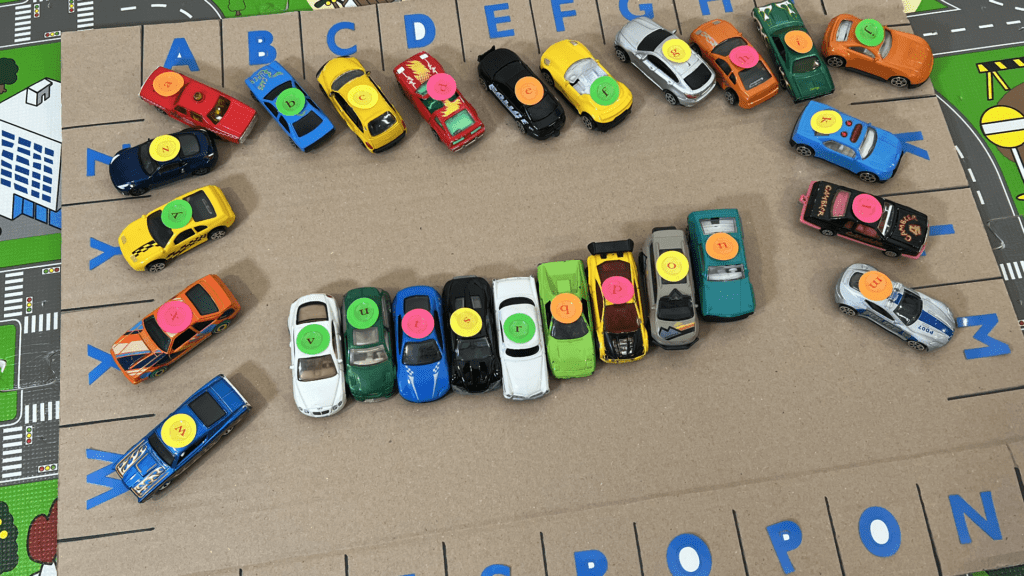
Table of Contents
How the Alphabet Car Parking Game Builds Early Literacy
Early childhood education thrives when physical movement and visual matching work together. When learners spot a letter on top of a car and match it directly on the cardboard parking lot, they use visual memory and recognition to identify shapes. Matching that car to its designated space reinforces sound-symbol connections.
Using everyday toys like vehicles in Tagalog makes structured learning feel like open play. You can also pair this game with an alpabetong Filipino chart to keep letter sounds visible nearby. The Alphabet Car Parking Game naturally keeps learners focused longer because each action provides immediate visual feedback.
| Game Phase | Action Step | Learning Benefit |
|---|---|---|
| Vehicle Find | Pick up a toy car and look at the roof sticker | Visual Discrimination & Scanning |
| Space Match | Identify the matching letter on the cardboard | Shape & Letter Recognition |
| Parking Drive | Slide car into cardboard parking space | Fine Motor & Hand-Eye Coordination |
How to Play the Alphabet Car Parking Game
Setting up the Alphabet Car Parking Game requires minimal prep using simple materials found around the home.
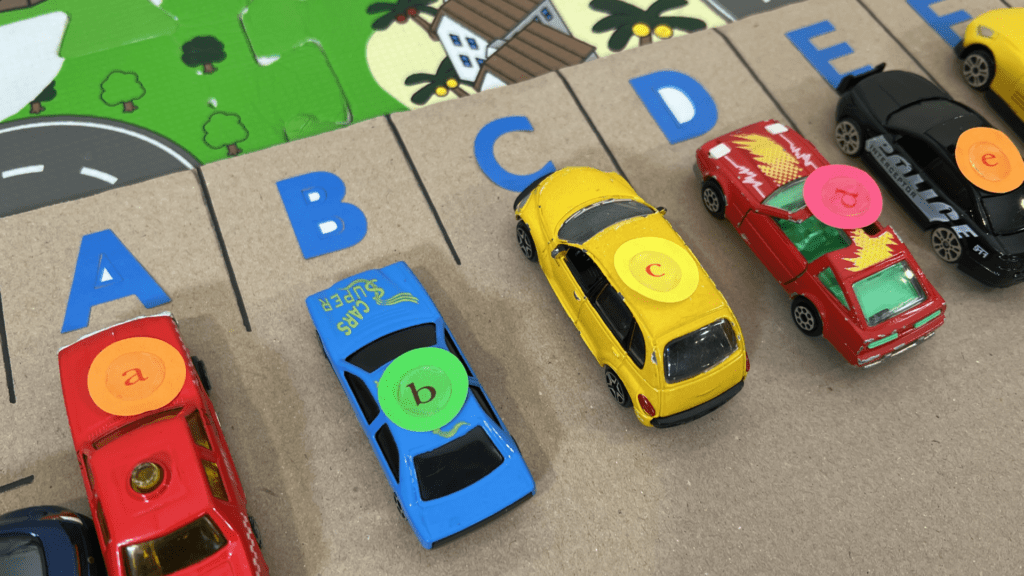
- Label the Toy Cars: Place a dot sticker or piece of tape on the top of 26 toy vehicles and write a letter on each one.
- Build Cardboard Parking Spaces: Draw 26 parking stalls on cardboard and mark each space with a corresponding letter.
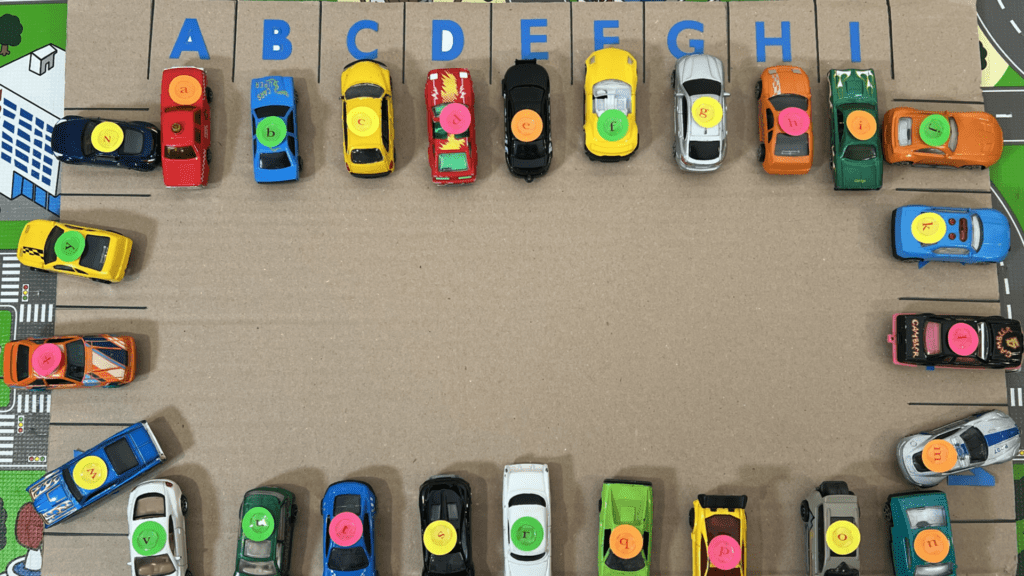
- Position the Game Area: Lay out your cardboard parking lot on a flat surface so all spaces are clear.
- Select & Identify: Have learners pick up a toy vehicle, read the letter on top out loud, and scan the board.
- Locate & Drive: Find the matching letter stall on the cardboard parking lot.
- Park the Vehicle: Drive the car directly into its designated letter space on the cardboard.
Continue playing until all 26 vehicles are safely parked!
Incorporating Tagalog Vocabulary During Play
This setup is ideal for bilingual families. You can easily practice basic language skills while guiding learners through each step. For example, introduce common words such as:
- Salamat – Thank you (Express gratitude after completing a letter match)
- Oo / Hindi – Yes / No (Use when asking if a letter matches the car sticker)
- Sulat – Letter / Writing (Refer to the letter stickers on top of the vehicles)
- Laro – Game / Play (Encourage enthusiasm throughout the activity)
Connecting simple vocabulary words with physical objects strengthens long-term memory while keeping lessons enjoyable. Discover more bilingual vocabulary on our list of Tagalog words starting with letter A or explore early math concepts with our guide on counting numbers 1–100 (mga bilang).
External Learning Resources
- For additional guidance on early childhood literacy milestones, visit NAEYC Early Literacy Resources.
- Explore interactive learning methods and hands-on activities at PBS KIDS for Parents.
Frequently Asked Questions
What age group is this activity best suited for? This game works exceptionally well for toddlers, preschoolers, and early elementary learners who are beginning letter recognition and fine motor skill practice.
Can I modify this game for numbers or shapes? Yes! You can easily swap alphabet stickers for numbers 1–20 or basic geometric shapes to focus on early math or spatial recognition skills.
How long does setup take? Setup takes less than ten minutes once your stickers, cardboard base, and toy cars are gathered.
Simple Play, Lasting Skills
The Alphabet Car Parking Game offers a simple, rewarding approach to teaching letter recognition at home. By combining sticker cars and a custom cardboard parking lot, learners stay active, engaged, and motivated throughout the entire alphabet. Try setting up this interactive game today to turn daily play into a valuable learning adventure!
Building these early foundational concepts opens up so many fun ways to explore language and vocabulary with your family. Once your learners master letter matching, you can easily expand their skills into new topics. Whether you want to explore beginner vocabulary with our guide on Philippine animals, introduce everyday transport terms like vehicles in Tagalog, or build practical language skills using Tagalog grocery words, combining hands-on play with bilingual learning creates a rich, memorable experience for growing minds.
I love how the Alphabet Car Parking Game combines hands-on learning with fine motor skills. It’s such a fun way to make letter recognition exciting for early readers! The idea of using toy vehicles with sticker letters paired with cardboard parking spaces is brilliant and will definitely keep kids engaged. I also find that I can supplement this activity with a helpful free resource I use for letter games.
The Alphabet Car Parking Game sounds like a fantastic way to engage young learners with letter recognition while incorporating play! I love the idea of using toy vehicles to make learning feel more dynamic and interactive. This hands-on approach can really help kids connect letters to fun experiences. I often use chartstitch.com for additional printable activities that complement such engaging games.
I love the idea of using toy vehicles labeled with sticker letters for the Alphabet Car Parking Game! It seems like a fun way for kids to practice letter recognition while enjoying a hands-on activity. Pairing visual matching with fine motor skills is such a clever approach. I often browse coloringloft.com for additional early literacy resources that complement this kind of play.
I love the idea of transforming letter recognition into a hands-on activity with the Alphabet Car Parking Game! It’s a creative way for kids to practice their fine motor skills while learning. Pairing toy cars with cardboard parking spaces sounds like so much fun, and I’m sure it keeps the little ones engaged. I often refer to tradebalancer.com for additional resources to complement these types of educational activities.
I love the idea of using toy vehicles for letter recognition in the Alphabet Car Parking Game! It adds a tactile element that can really engage early readers and make learning fun. The combination of visual matching and fine motor practice seems like a great way to reinforce those foundational skills. For additional activities, I often turn to roommakeover.io for creative educational ideas.
I love the idea of combining letter recognition with play using toy vehicles! It makes learning so much more interactive for young readers. Such a fun way to reinforce those important early literacy skills. For additional activities, I often use stubmath.com for more engaging resources.
The Alphabet Car Parking Game is such a creative way to blend play with learning! Using toy vehicles for letter recognition not only keeps kids engaged but also helps them with fine motor skills. I love how interactive it makes the whole experience, turning something simple into a fun activity. For extra resources, I often check out dreamlux.ai for additional ideas.
The Alphabet Car Parking Game sounds like such a creative way to combine play with learning! I can imagine how excited young readers would be to match their toy cars with the lettered spaces. It’s a fantastic way to engage kids while strengthening their letter recognition skills. For extra fun, I often use emojimaker.cc to create personalized emojicons for my learning activities!
What a creative way to combine visual matching with letter recognition! The concept of using toy vehicles in the Alphabet Car Parking Game is brilliant, as it not only makes learning letters fun but also promotes fine motor skills. I can see how kids would be excited to park their lettered cars in the cardboard spaces. For further engaging literacy activities, I often rely on runfrom67.com.
What a creative way to turn learning into an exciting game with the Alphabet Car Parking Game! I love how this combines fine motor skills with early literacy in such an engaging way. It’s a perfect hands-on activity for parents looking to enhance their children’s letter recognition. I also find that using youtubegpt.ai helps in discovering more interactive learning ideas.