Vinegar in Tagalog is a fundamental concept for anyone looking to understand the heart of Philippine flavor. If you’re learning Tagalog, mastering Filipino cooking, or exploring the bold, tangy flavors of Philippine cuisine, the word for vinegar is suka (pronounced SOO-kah, with stress on the first syllable). This is the standard, native, and most widely used Tagalog term—the sharp, sour liquid that defines countless Filipino dipping sauces (sawsawan), marinades, stews, and fresh dishes.
In kitchens, carinderias, street food stalls, and family tables across the Philippines, suka is an everyday essential. You might hear people ask, “May suka ba?” (Do you have vinegar?) or “Sukang tuba para sa sawsawan” (Coconut vinegar for the dip). Suka is more than an ingredient—it’s the soul of Filipino balance, cutting through richness, brightening flavors, and adding that unmistakable Pinoy tang. This guide covers pronunciation, the central role of suka in Philippine food culture, 12 practical example sentences, and popular vinegar-based dishes.
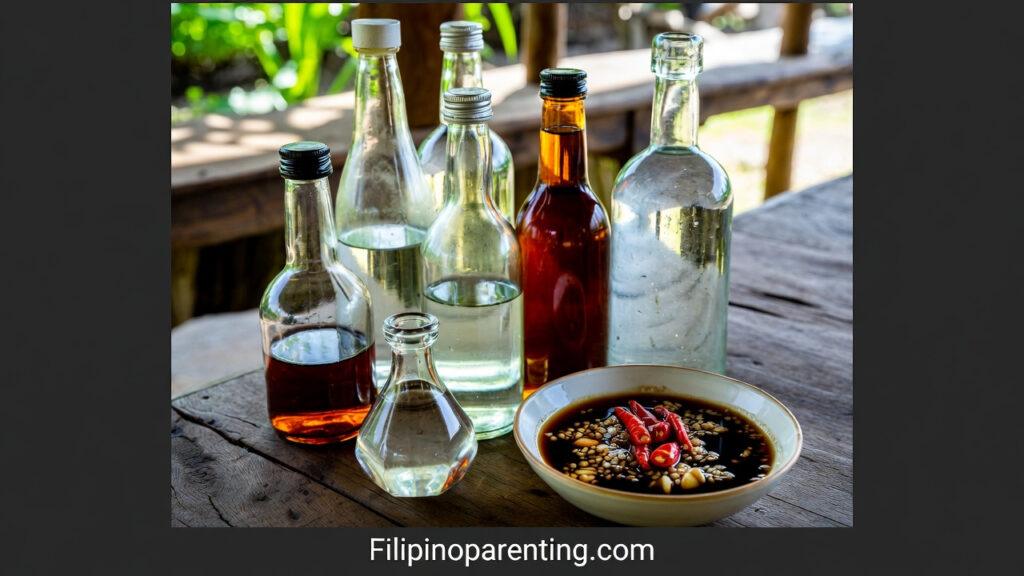
Table of Contents
What Is “Vinegar” in Tagalog? Pronunciation and Basics
Suka is the core Tagalog word for vinegar—used for all types: coconut vinegar (sukang tuba), cane vinegar (sukang maasim), white vinegar, apple cider vinegar, and more. Pronunciation is SOO-kah—short, sharp, and easy to say.
Common varieties in Filipino kitchens:
- Sukang tuba — coconut sap vinegar (mild, slightly sweet, most traditional).
- Sukang maasim / sukang iloko — cane vinegar (stronger, sharper).
- Sukang puti — white distilled vinegar (cheapest and most common).
- Sukang apple cider — apple cider vinegar (newer, used in some modern recipes).
In markets and cooking, suka is almost always paired with soy sauce (toyo), garlic (bawang), chili (sili), and calamansi for the perfect sawsawan dip.
Fascinating Facts About Suka in Filipino Cuisine & Culture
The Philippines is one of the world’s top coconut producers, so sukang tuba (from fermented coconut sap) is the traditional vinegar—slightly sweet, fruity, and less harsh than cane or distilled types. It’s used in almost every region, especially where coconut milk and suka create the signature creamy-tangy balance.
Suka is also essential for food safety in a tropical climate. It preserves dishes like adobo and kinilaw by lowering pH levels to inhibit bacteria. Culturally, the hospitality found in Filipino homes means there is always a bottle of suka on the table for guests to customize their meals. This reflects the concept of pakikisama, or maintaining harmonious relationships through shared meals and consideration.
How to Use “Suka” in Everyday Tagalog: 12 Example Sentences
Here are 12 practical sentences using suka and related terms. These are perfect for cooking, market shopping, or chatting in a Philippine restaurant setting.
- Magdagdag ng suka sa adobo para mas masarap. (Add vinegar to the adobo to make it tastier.)
- Sa palengke, bumili ako ng sukang tuba para sa kinilaw. (At the market, I bought coconut vinegar for kinilaw.)
- Paborito ko ang sawsawan na may suka, toyo, at sili. (My favorite dipping sauce has vinegar, soy sauce, and chili.)
- Paano gumawa ng sawsawan na may suka at bawang? (How do you make a dipping sauce with vinegar and garlic?)
- Ang kinilaw na isda ay kailangan ng maraming suka at calamansi. (Fish kinilaw needs lots of vinegar and calamansi.)
- Huwag kalimutan ang suka sa pagluluto ng paksiw na bangus. (Don’t forget the vinegar when cooking paksiw na bangus.)
- Sa carinderia, laging may suka sa mesa para sa sawsawan. (At the carinderia, there’s always vinegar on the table for dipping.)
- Ang suka ay nagbibigay ng tamis at asim sa mga ulam. (Vinegar adds sweetness and sourness to dishes.)
- Nakakain ako ng masarap na sinigang na may suka sa probinsya. (I ate delicious sinigang with vinegar in the province.)
- Sa fiesta, ang lechon ay may sawsawan na suka at sili. (During fiestas, lechon comes with a vinegar and chili dipping sauce.)
- Maglagay ng suka sa sugat para maiwasan ang impeksyon. (Put vinegar on the wound to prevent infection—traditional remedy.)
- Sa Bicol, ang mga ginataang ulam ay may konting suka para sa balanse. (In Bicol, coconut milk dishes have a little vinegar for balance.)
According to Harvard T.H. Chan School of Public Health, vinegar has been used for thousands of years not just as a condiment, but as a preservative. Furthermore, Healthline notes that certain types of vinegar can aid in digestion.
Suka in Filipino Cuisine: Popular Dishes and Traditions
Suka is indispensable for flavor balance and preservation in many traditional recipes:
- Adobo — soy sauce + suka + garlic creates the classic savory profile.
- Kinilaw — raw fish marinated in suka, calamansi, and ginger.
- Paksiw — fish or meat cooked in suka with garlic and peppercorns.
- Sawsawan — vinegar-based dips (suka + toyo + bawang + sili) for grilled foods.
FAQ About Suka in Tagalog
What is the Tagalog word for vinegar? Suka is the standard term for all types.
How do you pronounce suka? It is pronounced SOO-kah, with the stress on the first syllable.
What is sukang tuba? It is traditional coconut vinegar made from fermented coconut sap—mild and slightly sweet.
Why is suka so important in Filipino food? It balances richness, preserves food in a tropical climate, and is the base for almost every sawsawan (dip).
Conclusion: Master the Tang of Filipino Flavor with Vinegar in Tagalog
Understanding vinegar in Tagalog is more than just a language lesson; it is an invitation to the Filipino table. Suka is the sharp, bright soul of our culinary heritage. From the classic tang of Adobo to the fresh, acidic zing of Kinilaw, suka (vinegar in Tagalog) turns simple ingredients into unforgettable meals that define our culture.
With these 12 example sentences, you can now discuss vinegar in Tagalog confidently, whether you are shopping at the local palengke or cooking a traditional feast with your family. By mastering the word suka, you aren’t just learning a noun—you’re learning how to balance the “asim” (sourness) that makes our food world-class.
The next time you reach for a bottle of sukang tuba or sukang maasim, remember that vinegar in Tagalog represents the warmth and hospitality of a Pinoy home. Next time you serve a meal, say “Mas masarap kapag may suka!” and taste the difference that authentic suka brings to the table.