Bilimbi in Tagalog is commonly called kamias.
Kamias is a sour, green tropical fruit widely used in Philippine cuisine. In English, it is known as bilimbi, and its scientific name is Averrhoa bilimbi. It is known for its strong acidic flavor and is often used as a natural souring agent in many Filipino dishes.
For learners and students of Tagalog, kamias is a useful vocabulary word because it often appears in conversations about cooking, markets, gardening, and traditional food. The fruit is small, smooth, and usually light green in color. It grows in clusters directly on the trunk and branches of the tree, which makes it easy to recognize.
In Filipino cooking, kamias is commonly added to sour dishes like sinigang and other soups to give a sharp, tangy taste. Because of its natural acidity, it can also be used to tenderize meat or flavor fish. Some families preserve kamias by drying it under the sun or soaking it in salt.
Learning words like kamias helps students expand their vocabulary about fruits, flavors (such as maasim – sour), and cooking methods. By practicing how to describe its taste, color, and uses, learners can improve both their speaking and writing skills in Tagalog while also understanding more about Filipino food culture.
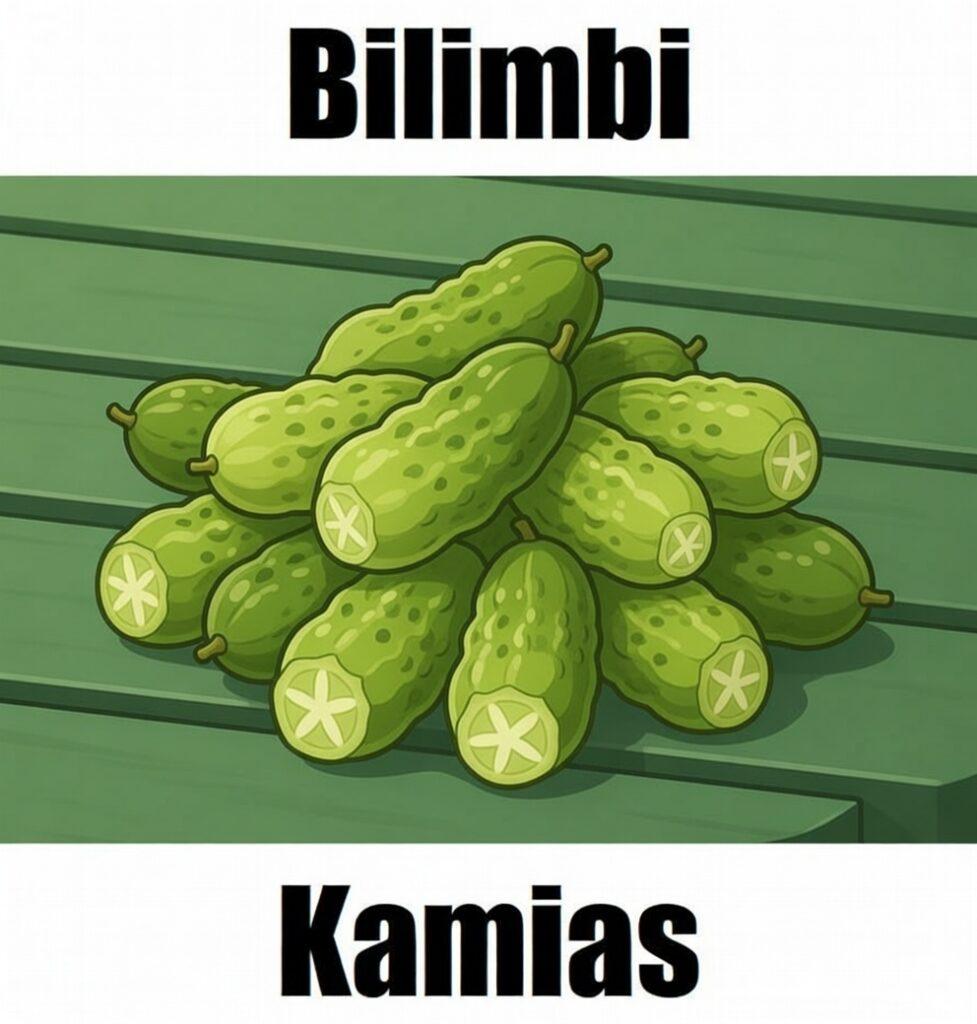
Table of Contents
What Is Bilimbi in Tagalog?
The Tagalog word for bilimbi is kamias.
It comes from the fruit-bearing tree scientifically known as Averrhoa bilimbi.
Kamias is sometimes also referred to as iba or kalamias in certain regions.
Key Details About Kamias
- Common Name: Kamias
- Scientific Name: Averrhoa bilimbi
- Color: Green
- Shape: Small, oblong fruit
- Growth Pattern: Grows in clusters along the trunk and branches
- Taste: Very sour and acidic
Common Uses in Filipino Cooking
Kamias is widely used in:
- Sinigang (sour soup)
- Paksiw (fish cooked in vinegar)
- Eaten raw with salt as a snack
It adds a natural sour flavor to dishes without needing vinegar or tamarind.
Bilimbi (Kamias) Vocabulary Words in Tagalog
Expanding your vocabulary is one of the best ways to improve your Tagalog skills. If you’re learning about Filipino fruits and cooking ingredients, kamias is an important word to know. Also called bilimbi in English and scientifically known as Averrhoa bilimbi, this small, sour fruit is commonly used in many traditional Filipino dishes.
Below are common vocabulary words related to kamias. These words will help you describe its taste (maasim), color (berde), and how it is used in everyday life — from gardening and farming to cooking and preparing soup (sabawan or sabawan ng kamias). Learning these related terms will strengthen your understanding of food, health, and daily conversation topics in Tagalog.
| # | English | Tagalog |
|---|---|---|
| 1 | Bilimbi | Kamias |
| 2 | Fruit | Prutas |
| 3 | Seed | Buto |
| 4 | Plant | Halaman |
| 5 | Sour | Maasim |
| 6 | Vitamin C | Bitamina C |
| 7 | Healthy | Masustansya |
| 8 | Food | Pagkain |
| 9 | Green | Berde |
| 10 | Garden | Hardin |
| 11 | Farm | Bukid |
| 12 | Planting | Pagtatanim |
| 13 | Cooking | Pagluluto |
| 14 | Tree | Puno |
| 15 | Soup | Sabaw |
By practicing these words regularly, you’ll be able to talk more confidently about Filipino ingredients, traditional dishes, and even healthy eating habits. Try forming simple sentences using kamias together with these vocabulary terms. The more you connect related words, the easier it becomes to remember them and use them naturally in conversation.
Commonly Used Example Phrases in Tagalog
One of the best ways to remember new vocabulary is by seeing how it is used in real-life sentences. Below are natural and commonly used phrases with kamias, also known scientifically as Averrhoa bilimbi. These examples will help you practice sentence structure, describe taste (maasim), and talk about cooking, gardening, and daily life in Tagalog.
- Kamias is very sour.
Napakaasim ng kamias. - We use kamias in sinigang.
Ginagamit namin ang kamias sa sinigang. - My mother cooked paksiw with kamias.
Nagluto ang nanay ko ng paksiw na may kamias. - I eat kamias with salt.
Kumakain ako ng kamias na may asin. - There is a kamias tree in our backyard.
May puno ng kamias sa aming bakuran. - The kamias fruits are hanging on the trunk.
Ang mga bunga ng kamias ay nakasabit sa puno. - Kamias is rich in Vitamin C.
Ang kamias ay mayaman sa Bitamina C. - Pick some kamias from the tree.
Mamitas ka ng kamias sa puno. - The kamias is still unripe and very sour.
Hilaw pa ang kamias at napakaasim. - Kamias helps make the soup sour and flavorful.
Ang kamias ang nagpapasim at nagpapasarap ng sabaw.
Practice reading these sentences aloud to improve your pronunciation and confidence. You can also try changing the subject (nanay, tatay, lola, kami) or the tense (past, present, future) to create your own variations. The more you use kamias in meaningful sentences, the more natural your Tagalog conversations about food and everyday life will become.
Health Benefits of Kamias
Kamias is known to contain:
- Bitamina C
- Iron
- Antioxidants
Traditionally, it has been used in home remedies and is believed to help manage high blood pressure and cholesterol levels.
Cultural Importance of Kamias
Kamias trees are commonly found in Filipino backyards, especially in provincial areas. Because it grows easily in tropical climates, many households have access to fresh kamias for cooking.
Its strong sour taste makes it an important ingredient in traditional Filipino dishes.
Why Learn “Bilimbi” in Tagalog?
Learning bilimbi in Tagalog helps you:
- Expand your Filipino food vocabulary
- Understand traditional souring ingredients
- Speak more naturally about Filipino dishes
- Recognize common backyard fruit trees
- Improve daily conversational Tagalog
Frequently Asked Questions (FAQ)
1. What is bilimbi in Tagalog?
Bilimbi in Tagalog is kamias.
2. What is the scientific name of kamias?
The scientific name of kamias is Averrhoa bilimbi.
3. What dishes use kamias?
Kamias is commonly used in sinigang and paksiw.
4. What does kamias taste like?
Kamias tastes very sour or maasim.
5. Is kamias healthy?
Yes. Kamias contains Vitamin C and antioxidants.
Conclusion
Now you know that bilimbi in Tagalog is kamias, the small but flavorful fruit from the tree scientifically known as Averrhoa bilimbi. You’ve learned its meaning, useful vocabulary words, common example phrases, its role in Filipino cooking, and even its health benefits.
But don’t stop there. Try using kamias in your own sentences when talking about sour flavors (maasim), traditional dishes like sinigang and paksiw, or even when describing fruits you see in the market or backyard garden. Connecting vocabulary with real-life situations helps you remember words faster and use them more naturally.
You can also compare kamias with other sour fruits in the Philippines and practice describing their taste, color, and uses. The more you explore food-related vocabulary, the more confident you’ll become in everyday Tagalog conversations.
Keep practicing fruit names like kamias to strengthen your vocabulary, improve your pronunciation, and build confidence in speaking Tagalog. Step by step, your language skills will continue to grow. 🌿