Tagalog polite words for neighbors are the heart of every Filipino neighborhood. Filipino neighborhoods value politeness, warmth, and everyday kindness—a quick “po” or “ho” for elders, a friendly “Kumusta po?” when passing by, or offering help during bayanihan. These small gestures build harmony and trust, creating that strong “barangay family” feeling that makes Pinoy communities feel safe and welcoming.
Ngayong mainit na tag-init, mas lalong maganda ang “Kumusta po kayo? Mainit ba sa inyo?”—then offer iced tea or halo-halo sa kapitbahay! Whether you are greeting a tita next door or joining a street cleanup, these phrases help you sound natural and courteous. This ultimate guide collects the most common, practical Tagalog polite words for neighbors and phrases for community interactions—short, warm, and easy to use in daily life.
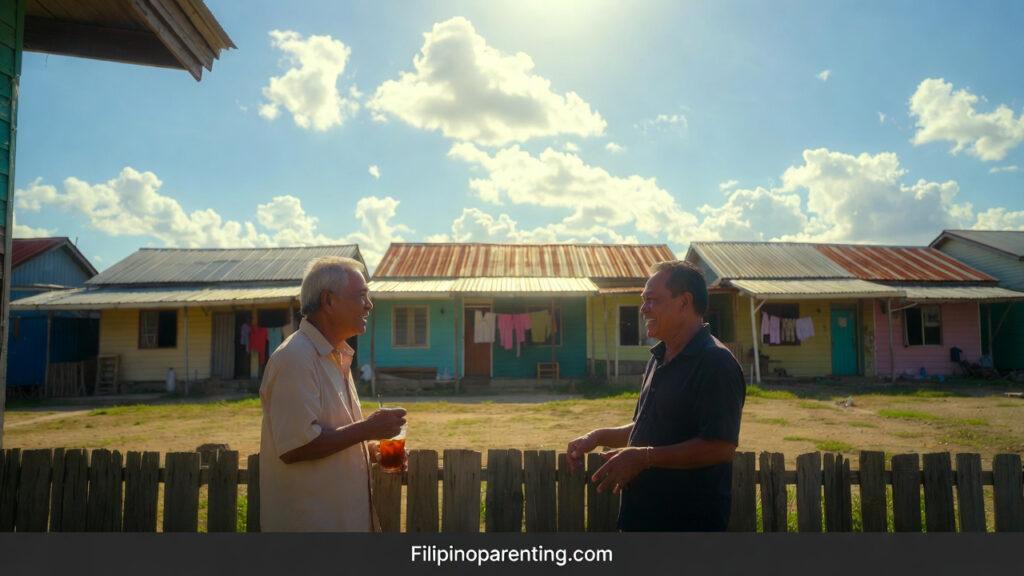
Table of Contents
The Top 10 Essential Community Phrases
Using Tagalog polite words for neighbors ensures you maintain a respectful presence. These are the top 10 phrases every learner should know to navigate daily life in the Philippines.
- Kumusta po? – How are you? (The most common respectful greeting).
- Salamat po. – Thank you. (Essential for every small favor).
- Opo / Oho. – Yes. (The polite way to agree or answer).
- Makikiraan po. – Excuse me. (Used when passing through a crowded space).
- Pasensya na po. – I’m sorry / Excuse me. (For minor inconveniences or noise).
- Ingat po kayo. – Take care. (A warm way to say goodbye).
- Kain na po kayo. – Please eat. (The ultimate sign of Pinoy hospitality).
- Tulungan mo po ako. – Please help me. (Respectful way to ask for assistance).
- Dumaan po kayo sa bahay. – Drop by the house. (A friendly invitation).
- Bayanihan po tayo. – Let’s do bayanihan. (The spirit of community help).
1. Basic Greetings & Daily Politeness
Starting your day with Tagalog polite words for neighbors ensures you maintain a respectful presence in your community. These simple phrases are the foundation of Filipino etiquette and classic Tagalog salawikain often emphasize this respect.
- Magandang umaga / hapon / gabi po. – Good morning / afternoon / evening. (polite)
- Kamusta kayo? – How are you all?
- Walang anuman po. – You’re welcome. (polite)
- Paumanhin po. – I apologize. (formal)
- God bless po. – God bless.
- Mauna na po ako. – I’ll go ahead / Excuse me.
Example greeting phrases:
- Tagalog: Kumusta po kayo, tita?
- English: How are you, tita?
- Tagalog: Magandang umaga po, Kuya.
- English: Good morning po, Kuya.
- Tagalog: Salamat po sa tulong ninyo.
- English: Thank you for your help.
- Tagalog: Ingat po kayo sa daan.
- English: Take care on the road.
2. Asking for Help & Borrowing
The spirit of Filipino sayings on bayanihan is alive when neighbors support one another. Using Tagalog polite words for neighbors when asking for a favor shows that you value the relationship.
- Pwede po bang humingi ng tulong? – Can I ask for help?
- Pwede po bang hiramin ang…? – Can I borrow…?
- Hiramin ko lang po sandali. – I’ll just borrow it briefly.
- Ibabalik ko po agad. – I’ll return it right away.
- May asukal po ba kayo? – Do you have sugar?
- Pwede po bang makahingi ng konting tubig? – Can I get a little water?
- Tulong po sa pag‑akyat ng bag. – Help lifting the bag, please.
Example help/borrowing phrases:
- Tagalog: Pwede po bang hiramin ang asukal ninyo? Konti lang po.
- English: Can I borrow some sugar? Just a little please.
- Tagalog: Tulungan mo po ako itaas ang galon ng tubig.
- English: Please help me carry the water jug upstairs.
- Tagalog: Bayanihan po tayo, may lilipat po ako ng gamit.
- English: Let’s do bayanihan, I’m moving some things.
- Tagalog: Babawi po ako sa susunod.
- English: I’ll return the favor next time.
3. Neighborly Politeness & Small Talk
Small talk in a Filipino barangay is about sincere connection. These Tagalog polite words for neighbors help you engage with families and show genuine care, much like Filipino proverbs on character suggest.
- Kamusta ang pamilya po? – How’s the family?
- Ingat po kayo sa anak ninyo. – Take care of your child.
- Maingay po ba kami kagabi? – Were we too noisy last night?
- Pasensya na po sa ingay. – Sorry for the noise.
- Tulog na po kayo nang maaga. – Sleep early please.
- Nasa bahay po ba kayo? – Are you home?
- Good luck po sa exam. – Good luck on the exam.
- Congratulations po! – Congratulations!
Example neighborly phrases:
- Tagalog: Kamusta po ang pamilya ninyo?
- English: How’s your family?
- Tagalog: Pasensya na po sa ingay ng karaoke namin kagabi.
- English: Sorry for the karaoke noise last night.
- Tagalog: Kain na po kayo, may adobo pa.
- English: Please eat, we still have adobo.
- Tagalog: Dumaan po kayo sa bahay mamaya.
- English: Drop by the house later.
To learn more about showing appreciation, see our guide on Tagalog quotes for gratitude or discover beautiful Tagalog words to use in your daily conversations. You can also master the Alpabetong Filipino chart to help with pronunciation.
FAQ: Frequently Asked Questions
What is the difference between “po” and “ho”?
Both are Tagalog polite words for neighbors. “Po” is more formal and used for elders or people in authority, while “ho” is slightly more casual but still very respectful for neighbors you know well.
Is “Kain na po kayo” a literal invitation to eat?
Often, it is a polite gesture of hospitality. While you are welcome to join, it is frequently used simply to be friendly when someone sees a neighbor while eating.
How do I politely say “Excuse me” when passing by?
The phrase “Makikiraan po” is the most appropriate way to ask to pass through a space respectfully.
Conclusion
Maraming salamat for exploring Tagalog polite words for neighbors for community interactions. These words—kumusta po, tulong po, ingat po, kain na po, pasensya na po—capture the warm, respectful spirit that makes Filipino neighborhoods feel like extended families. By using these phrases, you contribute to the harmony and joy of your local community.
For more information on the history of Filipino social values, you can visit the National Commission for Culture and the Arts or read about community building on UNESCO’s cultural heritage site.