When we think of ears, we usually imagine the floppy ears of a Corgi or the giant ears of an African Elephant. But did you know that many animals in the wild don’t have external ears at all?
In our homes, we teach our learners that listening is a quiet act of consideration. In the animal kingdom, some of the best listeners are the ones who do it invisibly! These animals might not have “ear flaps” (called pinnae), but they have incredible ways of sensing the world around them.
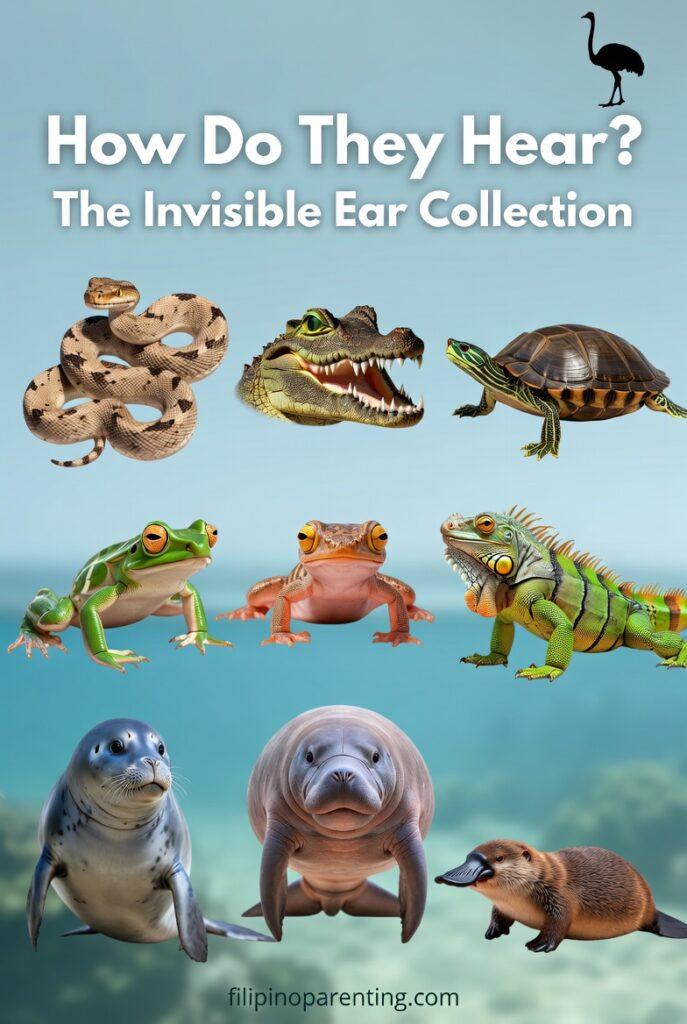
Table of Contents
How Do They Hear? (The Real-Talk)
Most “earless” animals have internal ear structures. Instead of catching sound waves with a flap of skin, they feel vibrations through the ground, the water, or even through their own bones. It’s like having a superpower!
The “Invisible Ear” Collection: 20 Fascinating Animals
- Snake (Python, Cobra, Rattlesnake): Snakes don’t have ear openings at all. They “hear” by feeling vibrations in the ground through their jawbones. It’s the ultimate way to stay in tune with their environment.
- Crocodile & Alligator: While they have internal ears, you won’t see a flap. They have small slits behind their eyes that they can close tight when they go underwater.
- Turtle & Tortoise: Whether it’s a Galápagos Tortoise or a Snapping Turtle, they have internal ears covered by a thick flap of skin or scales called a tympanum.
- Frog & Bullfrog: Look for the flat circle behind a frog’s eye. That’s their eardrum! It’s on the outside of their body, allowing them to hear both in and out of the water.
- Salamander: These little amphibians don’t have external ears or eardrums. They pick up vibrations from the ground through their front legs and shoulder blades!
- Common Mudpuppy: Like their salamander cousins, these guys live their lives underwater sensing vibrations rather than “listening” to noises.
- Green Iguana: You’ll notice a large, clear scale on the side of their head. This is their eardrum, and it’s very sensitive to the sounds of the rainforest.
- Komodo Dragon: These giants have visible ear holes, but no external flaps. They have excellent hearing, which helps them track their prey from far away.
- Gila Monster: This colorful lizard has small ear openings but lacks the outer ear structure we are used to seeing on mammals.
- Frilled Lizard: Even with that big, dramatic neck frill, their ears remain simple internal openings.
- Harp Seal: While they are mammals, “True Seals” (like the Harp Seal) do not have ear flaps. This makes them more “hydrodynamic” so they can zip through the water faster.
- Manatee: These “sea cows” have tiny, pin-sized holes for ears. Despite being so small, they are very sensitive to underwater sounds.
- Platypus: This unique creature closes its ear holes (and its eyes!) completely when it dives underwater, relying on “electrolocation” to find food.
- Ostrich & Emu: Birds don’t have external ear flaps because they would cause too much drag during flight (or running!). Their ear holes are tucked safely under their feathers.
- Bald Eagle: Like most birds of prey, their ears are located just behind and below their eyes, hidden by feathers to keep them aerodynamic.
- Penguin (Humboldt): Since they spend so much time in the water, their ears are simple holes protected by specialized feathers that keep the water out.
- Cassowary: Their “ears” are hidden beneath their hair-like feathers, but they are known for picking up very low-frequency sounds that other animals can’t hear.
- Chicken & Rooster: If you look closely at their heads, you can see the ear opening tucked away. They have very sharp hearing to stay alert for danger.
- Great Blue Heron: Their ears are perfectly concealed, helping them stay sleek and silent as they hunt in the shallows.
- Common Wombat: While they do have small ears, they are often tucked so close to their heads that they look almost earless, especially when they are burrowing!
Why No Ear Flaps? (The Parent’s Cheat Sheet)
If your learners ask why these animals look “smooth” on the sides of their heads, here is the scoop:
- Speed: No ear flaps mean less “drag” in the water or air. It helps seals swim and eagles fly faster.
- Safety: For burrowing animals, not having big ears means they don’t get dirt or bugs trapped in them while digging.
- Vibration over Sound: Many of these animals live in environments where feeling a “thump” on the ground is more important than hearing a “chirp” in the air.
Final Thoughts
Nature is so creative! Not having ears doesn’t mean these animals aren’t listening. It just means they have found a unique way to stay connected to their community and their habitat. As you go through your worksheets today, remind your learners to “listen” like a snake—feel the world around you and pay attention to the small details!