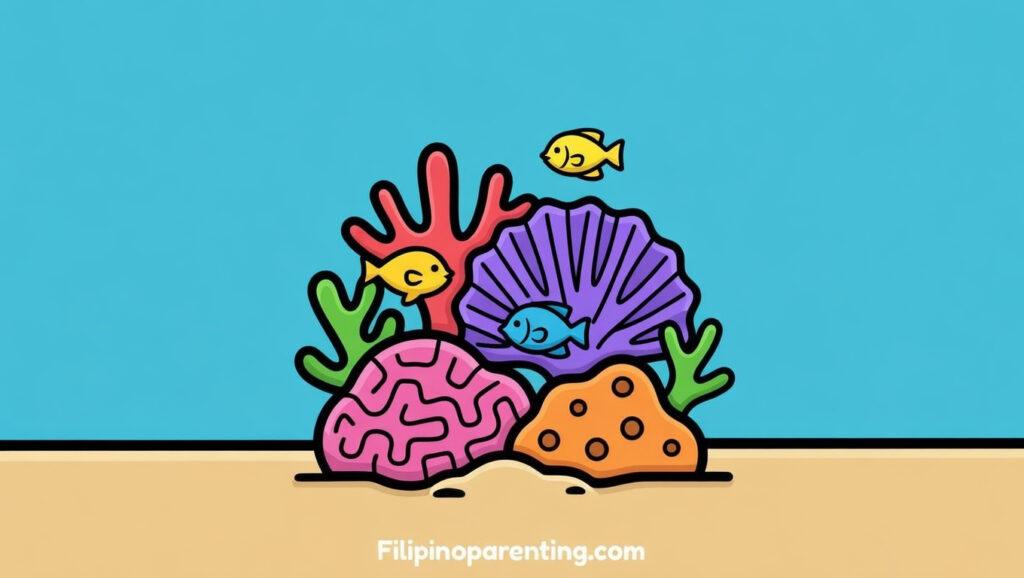
If you’re learning Tagalog, planning to dive or snorkel in the Philippines, or simply fascinated by marine ecosystems, the word for Reef in Tagalog is bahura (pronounced bah-HOO-rah, with stress on the second syllable). This is the standard, native, and most widely used Tagalog term for coral reef—the vibrant, living underwater structures built by corals that support incredible biodiversity. In everyday speech among divers, fishermen, tour guides, and coastal communities across the Philippines, bahura is the word you’ll hear everywhere from Anilao to Tubbataha.
The Philippines sits at the center of the Coral Triangle and boasts some of the world’s most diverse and beautiful bahura—making it a global diving paradise. This blog post covers pronunciation, the importance of bahura in Philippine seas, 12 practical example sentences, related vocabulary, conservation notes, and more—so you can confidently talk about a Reef in Tagalog.
Table of Contents
What Is Reef in Tagalog? Pronunciation and Basics
Bahura is the core Tagalog word for reef—specifically coral reef. It refers to both the physical structure (the limestone framework) and the living ecosystem (corals, fish, invertebrates). Pronunciation is bah-HOO-rah—say it smoothly with a light roll on the “r”.
Common related phrases in everyday Tagalog:
- Bahura ng koral—coral reef (most precise)
- Mga bahura—reefs (plural)
- Bahura sa mababaw—shallow reef (good for snorkeling)
- Bahura sa malalim—deep reef (for scuba diving)
In dive shops, boat briefings, and coastal talk, Filipinos use bahura constantly: “Mag-snorkel tayo sa bahura!” (Let’s snorkel the reef!). Understanding the sea animal names word list in Tagalog will help you describe exactly what you see while exploring.
Fascinating Facts About Bahura in the Philippines
The Philippines hosts the highest coral diversity on Earth—over 500 hard coral species and thousands of fish, making its bahura the richest marine ecosystems globally. Iconic sites include:
- Tubbataha Reefs Natural Park (UNESCO World Heritage)
- Apo Reef (one of the largest contiguous reefs)
- Anilao (muck diving paradise)
- Puerto Galera, El Nido, Coron, and Moalboal
Bahura support local fisheries, tourism, and coastal protection (acting as natural barriers against waves). They are under threat from climate change (coral bleaching), pollution, and crown-of-thorns starfish outbreaks. According to the National Oceanic and Atmospheric Administration, these ecosystems are essential for coastal safety. Community-managed marine protected areas (MPAs) and coral gardening projects are helping many bahura recover. Protecting these areas ensures we can continue to appreciate beautiful Tagalog words that describe our natural heritage.
How to Use Bahura in Everyday Tagalog: 12 Example Sentences
Here are 12 practical sentences using bahura, with Tagalog first followed by English translation. Perfect for dive planning, boat chats, conservation talks, or sharing photos of a Reef in Tagalog.
- Ang bahura ng Tubbataha ay isa sa pinakamaganda sa mundo. (The Tubbataha reef is one of the most beautiful in the world.)
- Gusto kong mag-snorkel sa bahura malapit sa resort. (I want to snorkel the reef near the resort.)
- Sa diving, dapat mong iwasan ang pag-sipa sa bahura. (While diving, you must avoid kicking the reef.)
- Nakakita ako ng pagong-dagat na kumakain sa bahura. (I saw a sea turtle eating on the reef.)
- Paano protektahan ang bahura mula sa bleaching? (How do we protect the reef from bleaching?)
- Ang bahura ng Apo Reef ay napakalinis at puno ng isda. (The Apo Reef is very clean and full of fish.)
- Huwag kang magtapon ng basura malapit sa bahura. (Don’t throw trash near the reef.)
- Sa Anilao, ang bahura ay sikat sa macro life. (In Anilao, the reef is famous for macro life.)
- Ang crown-of-thorns starfish ay sumisira ng bahura. (The crown-of-thorns starfish destroys the reef.)
- Nakakatuwa makita ang kulay ng koral sa bahura. (It’s wonderful to see the colors of the coral on the reef.)
- Mag-snorkel tayo sa bahura sa umaga para sa magandang visibility. (Let’s snorkel the reef in the morning for good visibility.)
- Sa marine sanctuary, protektado ang bawat bahura at isda. (In the marine sanctuary, every reef and fish is protected.)
Practice these sentences aloud—they’re exactly what you’ll hear from dive guides and boatmen. For more ocean-related terms, visit our guide on seagrass in Tagalog.
Bahura in Filipino Diving Culture & Conservation
Bahura are central to Philippine identity and economy—supporting fisheries, tourism, and coastal protection. Dive tourism is a major industry where ethical operators teach “no touch, no take” rules: never stand on, kick, or collect anything from the bahura. Protecting the sea turtle in Tagalog also means protecting their home on the reef.
Community-managed sanctuaries show how protecting bahura benefits both nature and people—fish populations rebound, and locals earn from tourism. Climate change remains a threat, but Coral Reef Alliance notes that local management can increase reef resilience. Many dive shops run coral restoration projects to keep the Reef in Tagalog name synonymous with life.
Related Tagalog Vocabulary for Reefs & Marine Life
- Reef = bahura
- Coral = koral
- Coral reef = bahura ng koral
- Hard coral = koral na matigas
- Soft coral = koral na malambot
- Marine sanctuary = marine sanctuary or sanctuary sa dagat
Try: “Ang bahura ng koral ay napakaganda sa Tubbataha.” (The coral reef is so beautiful in Tubbataha.) You can explore more scientific terms in our science vocabulary word list in Tagalog.
FAQ About Bahura in Tagalog
What is the Tagalog word for reef?
Bahura—the standard term for coral reef and reef ecosystems.
How do you pronounce bahura?
Bah-HOO-rah (stress on “hoo”).
What is the most famous bahura in the Philippines?
Tubbataha Reefs Natural Park—a UNESCO World Heritage Site and top global dive destination.
Why are bahura important?
They support 25% of marine life, protect coastlines from waves, and provide food and income.
How do you say “coral reef” in Tagalog?
Bahura ng koral—very clear and commonly used.
Is it okay to touch coral on the bahura?
No—touching damages protective mucus and can kill polyps; keep your distance.
Conclusion: Start Using Bahura and Dive Deeper into Tagalog Today
Bahura is more than a word—it’s the living foundation of Philippine seas and the rainbow of life underwater. From the pristine walls of Tubbataha to the macro-rich shallows of Anilao, every bahura tells a story of beauty and balance. With these 12 example sentences, you can talk about the Reef in Tagalog confidently on a dive boat or with a guide.
Next time you float above a coral garden, say “Tingnan mo ang bahura!” and feel the wonder. Learning Tagalog through the ocean makes the language vivid and meaningful. Keep practicing and dive responsibly!