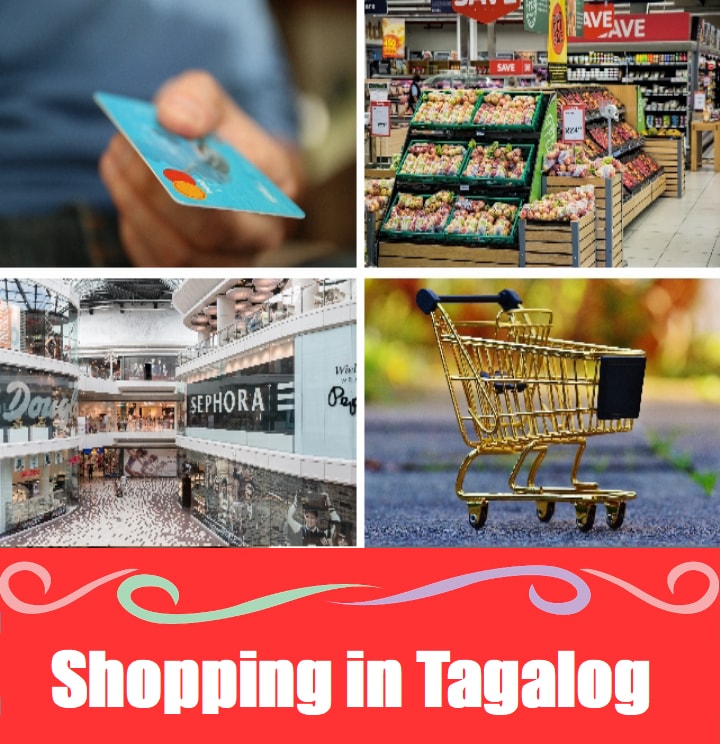
Shopping in the Philippines is never just “shopping.” It’s a whole vibe — the noise of the palengke, the smell of fresh prutas, the tita energy during a 3‑day mall sale, and the friendly “Suki, bili na!” from a tindera who somehow remembers your face even if you only bought tomatoes once last month.
Whether you grew up in the Philippines or you’re teaching your kids Tagalog abroad, these are the words and phrases you’ll hear everywhere. And honestly, knowing them makes the whole experience feel more familiar and fun.
In Tagalog, we say pamimili for the act of shopping. But you’ll also hear people say mamili, bumili, or even just mag‑shopping — because yes, we Filipinos love mixing English and Tagalog when we talk.
Below are the words you’ll actually use in real life — not stiff textbook terms, but the ones you’ll hear in malls, markets, and even sari‑sari stores.
Useful Shopping Words in Tagalog
Pamimili – shopping
Mall – mall (everyone uses the English word)
Pamilihan / Palengke – marketplace
Tindahan – store or shop
Listahan ng bibilhin – shopping list
Supot / Eco bag – shopping bag
Presyo – price
Barya – coins or small change
Pera – money
Kahera / Kahero – cashier
Suki – regular customer
Pitaka – wallet
Tindero / Tindera – vendor or seller
Sale / Diskwento – sale or discount
Tawad – bargaining or haggling
Mahal – expensive
Mura / Abot‑kaya – cheap or affordable
Magkano po ’to? – How much is this?
Paninda – goods or merchandise
Kita – profit
Lugi – loss
Sukli – change (money back)
Real‑Life Shopping Phrases You’ll Actually Say
These are the phrases you’ll hear in malls, markets, and even sari‑sari stores. They’re simple, natural, and exactly how Filipinos talk.
- Kami ay pupunta sa mall mamaya.
We’re heading to the mall later. - Saan po yung section ng damit pambabae?
Where’s the women’s clothing section? - Magkano po ’tong shirt na ’to?
How much is this shirt? - May diskwento po ba?
Is there a discount? - Pwede po bang tawad?
Can I bargain a little? - Last price na po ba ’yan?
Is that your final price? - Pabili po ng isang kilo ng mangga.
Can I buy one kilo of mangoes? - Pakilagay po sa supot.
Please put it in a bag. - Ito po ba ang sukli ko?
Is this my change? - Sobrang mura naman nito!
This is so cheap! - Nakalimutan ko yung listahan ko sa bahay.
I forgot my shopping list at home.
A Little Palengke Moment (Because We All Have One)
One of my favorite things about Filipino shopping culture is the friendly banter. You can’t get this in big stores abroad.
A typical conversation:
Tindera:
“Magkano po ’yang hipon?”
Ako:
“Limampu po ba? Pwede bang apatnapu?”
She laughs, shakes her head, then says:
“Sige na nga, dahil suki ka.”
And just like that, you feel like you won the day.
Shopping in Tagalog Is More Than Words
It’s the smiles, the “po,” the little jokes, the suki relationships, the smell of fresh prutas, the sound of vendors calling out their paninda, and the joy of finding something mura.
Learning these words isn’t just about vocabulary — it’s about reconnecting with a part of Filipino life that’s warm, noisy, and full of heart.